The Wells Reserve at Laudholm is special. Not a day passes that we don’t think of this unique place as a gift to those of us who work here, to the wildlife that abounds here, to the coast of Maine and to the international community of estuaries, and of course to our members and to the public.
Because so much of our operating support comes from our members and donors, we believe it is in the best service to you and your gifts that we operate as efficiently and effectively as possible.
Associated People Jacob Aman Jeremy Miller Kate Reichert Tin Smith
On a classic October morning, a research team heads to the Eliot–South Berwick line, where a private landowner has opened his property for a Wells Reserve study of fish and fish habitat. Parking the pickup at the end of a long hayfield, the five gather up gear and step into a middle-aged pine-oak forest, then head downslope past ferns and toppled trees till the trail goes wet underfoot, the canopy breaks, and they stand at the edge of Shoreys Brook. This is headquarters for the next few hours. It is one of eight sites along the brook’s 4.3 miles being surveyed for resident and migratory fish, and their habitat, in advance of a planned dam removal downstream.
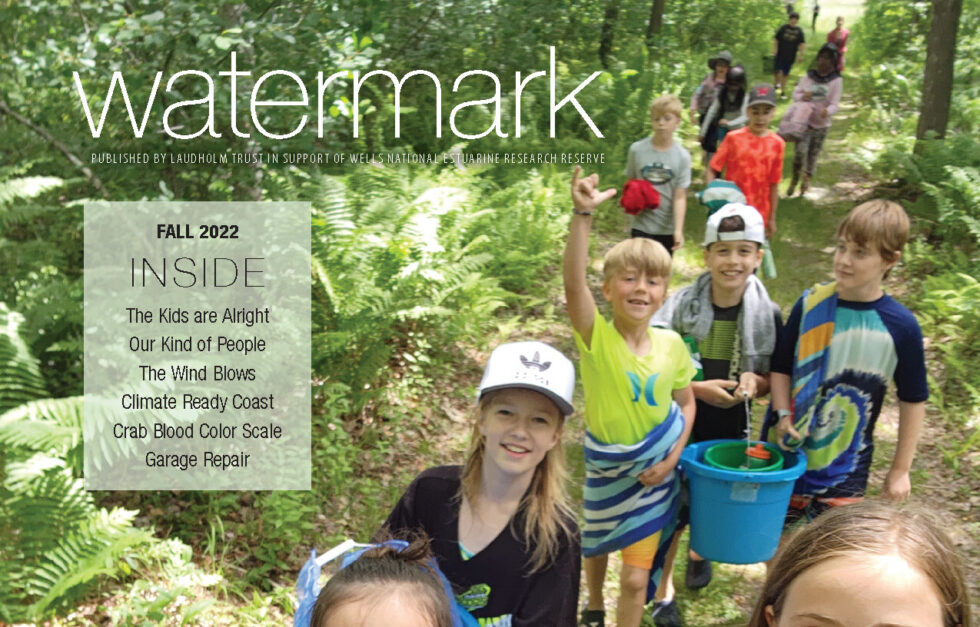
The new issue of Watermark is in the mail to Laudholm Trust members and it's now available online, too. This issue contains information and images about…
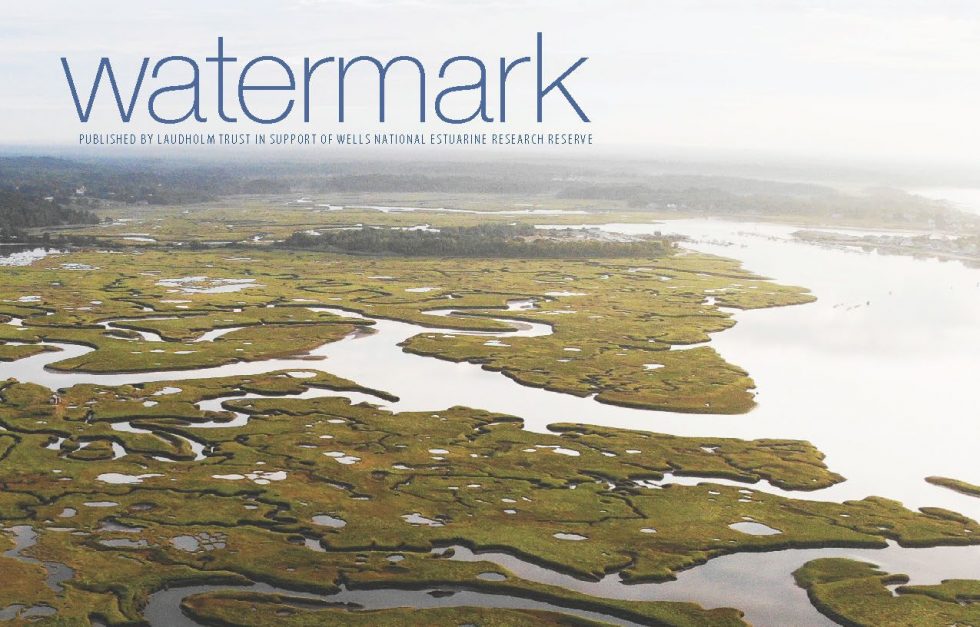
The fall 2010 issue of our Watermark newsletter is now available as a PDF. You can download it here (3.5 MB).
Associated People Suzanne Kahn Eder Susan Bickford Nancy Viehmann
Quick Links: Overlook • Beach • Field • Salt Marsh
With a camera and a computer you have everything you need to monitor habitat change over time at the Wells Reserve.
Rainwater harvesting can reduce flooding and erosion issues, as well as surface-water contamination, by slowing down and decreasing the volume of stormwater runoff. One way to harvest rainwater is by using a catchment technique such as rain barrels.
Associated People Tin Smith
Flooding in York County — is it becoming more common? Roads impassable, bridges washed out, basements full... the stories have become all too familiar in recent years.
The Mother's Day storm in May 2006 seemed an anomaly till the Patriots' Day storm hit in 2007. This March, the Wells Reserve measured 16 inches of rainfall, 5 inches more than Portland's record-setting 11. The roads closed and the sump pumps hummed again.
The Wells Reserve has produced or assisted with every key conservation planning document prepared for southern Maine watersheds over the past decade. The most recent issue of the Watermark newsletter includes a chart to show which plans cover each town and watershed. You can download the watershed conservation chart below (it's a small PDF).
The fall issue of Watermark is on its way to member mailboxes. Thanks to Lorraine, Mary, Marianne, Nancy, Nancy, and Dana, our volunteer mailing crew, for preparing the 2,266 pieces for delivery to the post office.
It is probably a rare coastal beachfront property owner who is not aware that beaches are dynamic systems that erode and accrete in response to storms, sediment supply, rising sea level, and the proximity of sea walls, jetties, and other forms of coastal "armor." Many beachfront owners are also aware that "natural" barrier beaches and their dune systems are able to persist in the face of sea level rise by transgressing, or migrating shoreward.
Associated People Paul Dest
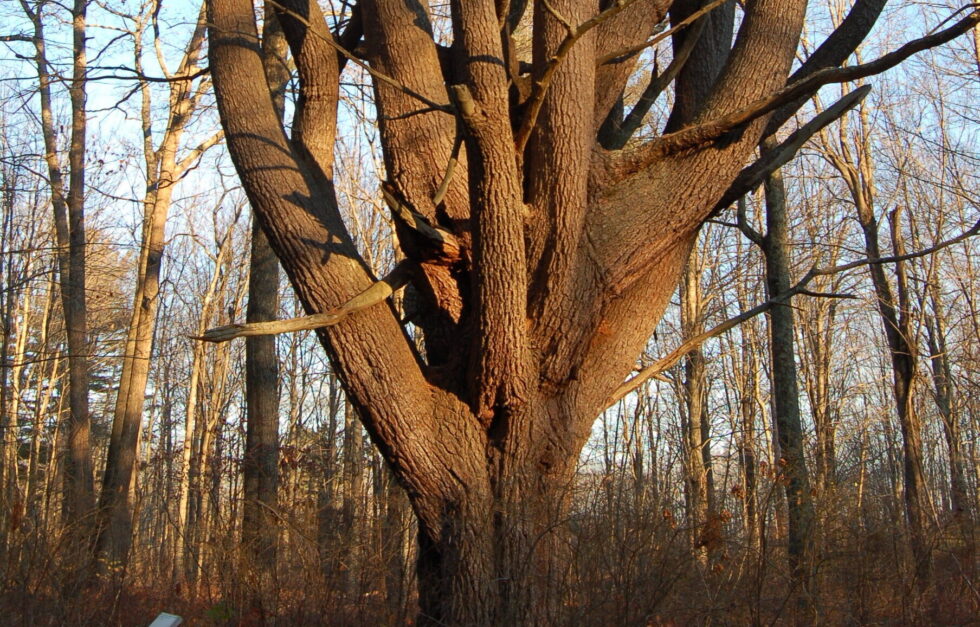
The Reserve's big beech has always been referred to by staff, Laudholm Trust members, and visitors as the copper beech, but the family that lived here throughout most of the 20th century preferred another name. "We always referred to it as the purple beech tree," says Nathaniel Lord.
Which is correct, purple or copper?
Appearing as wide as it is tall, the Wells Reserve's copper beech tree is a dominant presence on the campus, commanding the same respect from many of our visitors as the human-made historic structures or other natural features on the property. As befits a tree with such stature, the Reserve's beech has an interesting cultural and natural history.
Showing blog posts tagged watermark: 1–5 of 15