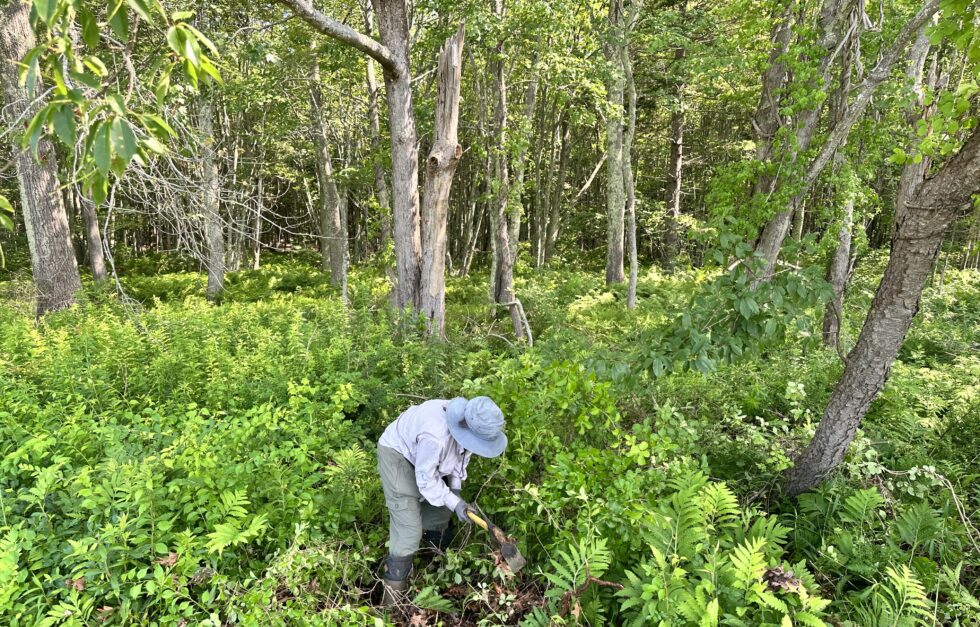
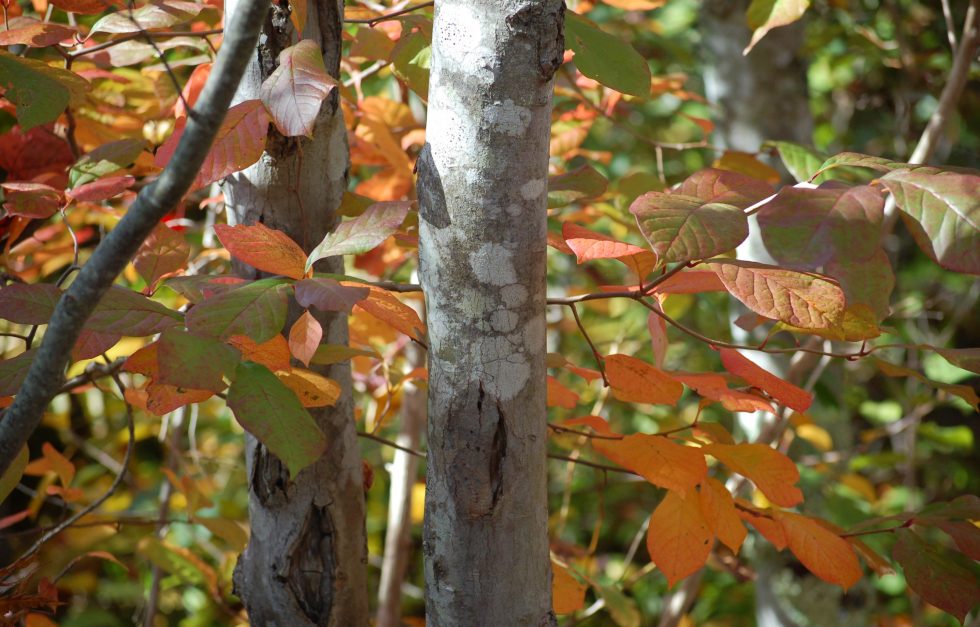
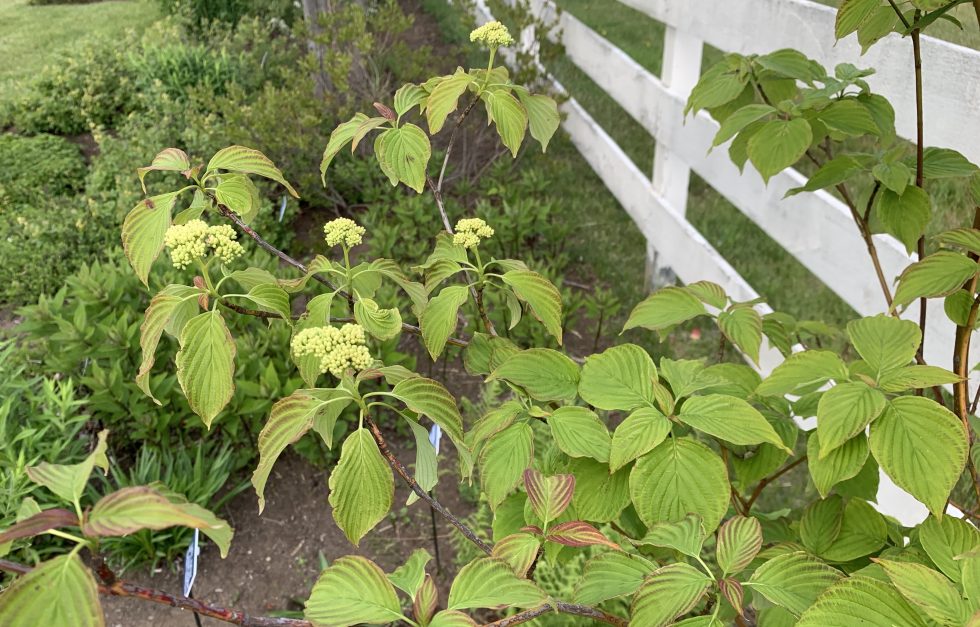
The Reserve recently received 12 trees from a nursery in midcoast Maine, thanks to the Maine Forest Service's "Project Canopy." This week, Charles, volunteer Mark Klys, and the AmeriCorps team planted them along the entry road, where they will serve as a wind break and visual buffer.
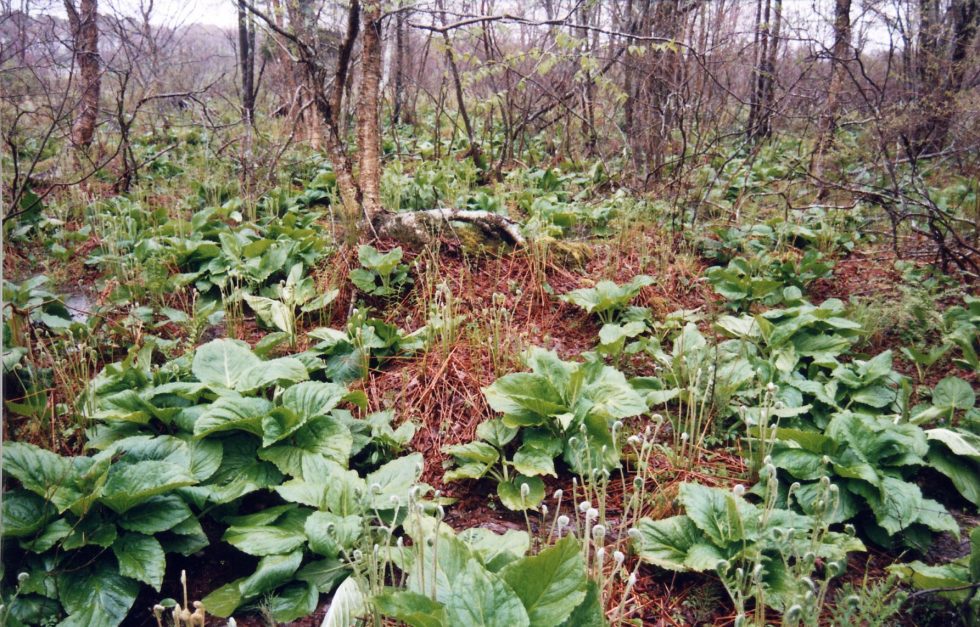
While walking the Wells Reserve trails this spring, naturalist Paul Miliotis discovered a tiny but beautiful orchid hiding under a skunk cabbage leaf. A group of us we went back to see the orchid, called early coralroot, Corallorhiza trifida, which was almost invisible before we got down on our knees on the boardwalk, and take a picture of its short yellowish stalks with tongue-like flowers. No leaves were visible, and C. trifida doesn’t really need them, because it is saprophytic, meaning that all its nourishment comes through symbiosis with the mycorrhizal fungi that form a vast underground network through healthy forest soils. Even plants that get energy through photosynthesis, such as oak trees and grapevines, gain resilience through their linkages to mycorrhizae. I was surprised but delighted by this find. Although C. trifida is a persistent plant (it is found in moist forests throughout the Northern United States and Canada), it is rarely seen.
Associated People Paul Dest
While marking fields for mowing on the newly acquired Lord Parcel this past August, Reserve Manager Paul Dest was thrilled to discover two stems of the showy yet threatened native plant, the Northern Blazing Star. Paul made sure the lonely stalks were well marked to avoid being mowed over.
The Northern Blazing Star (Liatris scaiosa) is a member of the aster family. It likes dry open grassy habitat and thrives in sandy barrens. It is at its northern most limit in Southern Maine and is found as far south as New Jersey. The largest population anywhere is located quite close by in the Kennebunk Plains. It truly lives up to its name in late July and early August, when the vibrant flowers turn the Plains ablaze in purple.
It may be numerous on the Kennebunk Plains, but actually the Northern Blazing Star is imperiled. This beautiful plant is listed as Threatened in Maine, Endangered in New Hampshire and Rhode Island, and of Special Concern in Massachusetts and Connecticut.
One factor is that it prefers early successional open space and particularly likes habitat subjected to periodic fires. Since natural fires have been widely suppressed and most open habitat is left to grow into mature forest, this special need of the Northern Blazing star requires special management practices. The Kennebunk Plains is actively managed for the Northern Blazing Star by the Nature Conservancy who regularly schedules controlled burns.
This year, while working on a controlled burn in a different field, the fire technicians stopped by the two Liatris stalks and burned an area around each plant to help make it feel at home and hopefully entice them to grow neighbors. This might enable the fields to return to a more native habitat rather than being primarily comprised of introduced agricultural species like it is now.
The Wells Reserve manages open space habitat for a variety of plants and animals. Now we can add the Northern Blazing Star to our list. Who knows, maybe someday soon we will be able to stand at the Webhannet Overlook and see our field ablaze in purple flowers as the late summer sun sets behind the hills.
On a recent walk to the upper meadow off the Saw Whet Trial, I came across an old friend. A pretty, frilly little flower called Ragged Robin.
Associated People Paul Dest
The Reserve's big beech has always been referred to by staff, Laudholm Trust members, and visitors as the copper beech, but the family that lived here throughout most of the 20th century preferred another name. "We always referred to it as the purple beech tree," says Nathaniel Lord.
Which is correct, purple or copper?
Appearing as wide as it is tall, the Wells Reserve's copper beech tree is a dominant presence on the campus, commanding the same respect from many of our visitors as the human-made historic structures or other natural features on the property. As befits a tree with such stature, the Reserve's beech has an interesting cultural and natural history.
Showing blog posts tagged flora: 1–5 of 6